Daido Moriyama “Lettres d’amour à la photographie” You see photos, I see a Living Being learning to Disappear

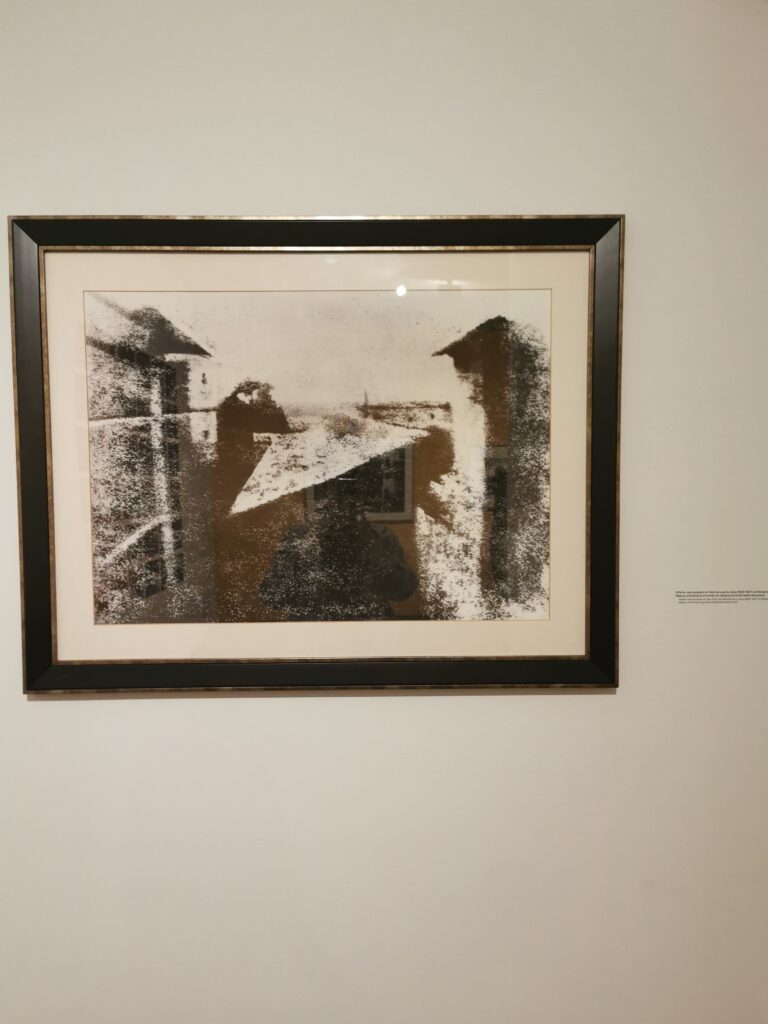
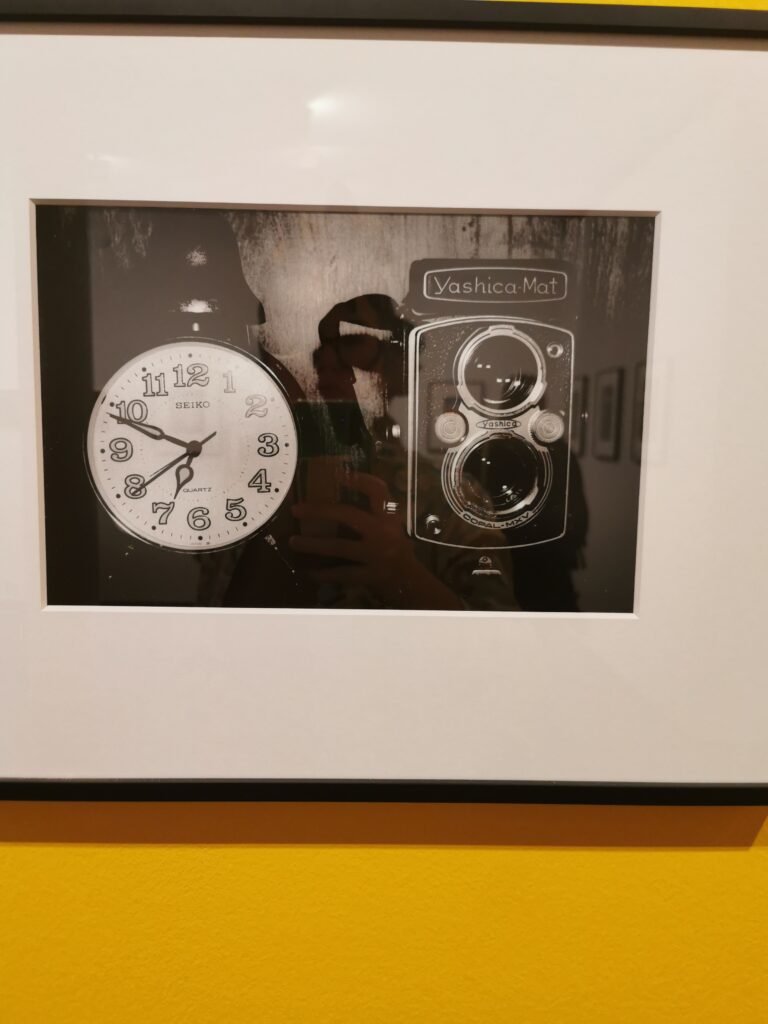
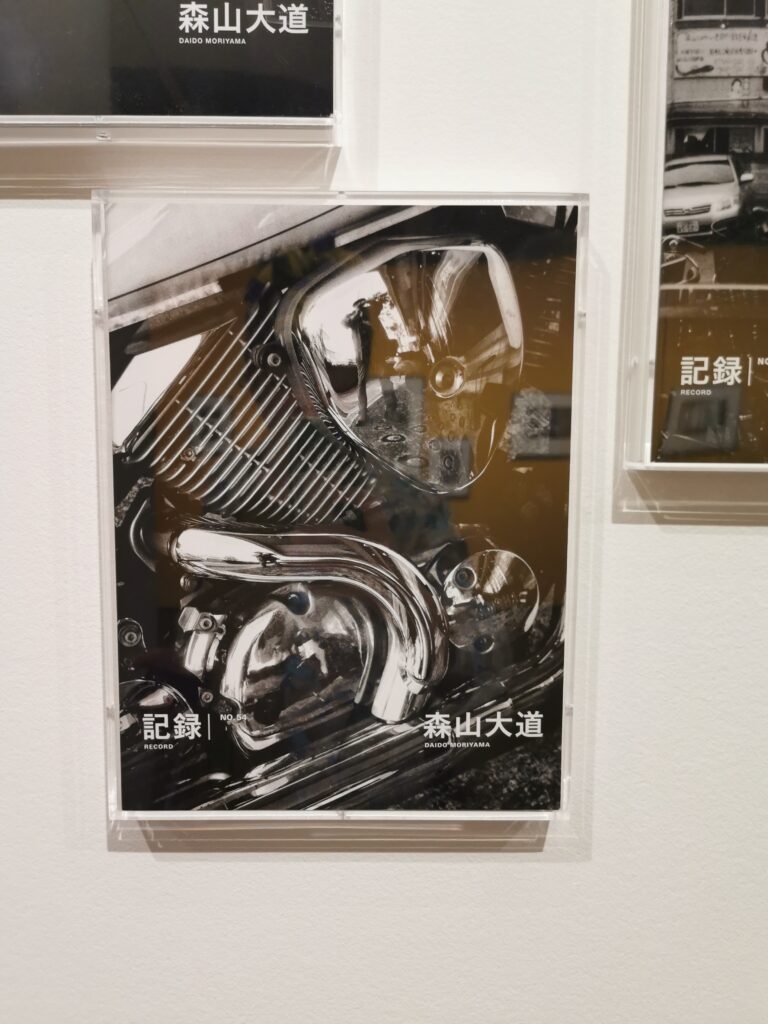
Walking into Lettres d’amour à la photographie, Daido Moriyama’s exhibition at the Fondation Henri Cartier-Bresson, it is easy to assume you are about to see a retrospective of one of the greatest Japanese photographers of the twentieth century. Iconic black-and-white prints, contact sheets, vintage cameras, books, magazines, rolls of film, personal archives—everything that usually forms the biography of an artist is here.
Yet it soon becomes clear that this exhibition is not so much about Moriyama himself as it is about photography. More precisely, it is about a lifelong love affair between an artist and a medium that he simultaneously embraces, dismantles, tests, and continuously reinvents.
For much of its history, Western photography has been built around the idea of preservation. From the family album to the museum archive, photography has been understood as a way of resisting disappearance. It was meant to stop time, preserve a face, prove that someone truly existed. Roland Barthes famously described every photograph in Camera Lucida as bearing witness to the fact that “that-has-been.” A photograph becomes almost a legal document of memory.
Moriyama seems to answer Barthes with a quiet but radical proposition: photography preserves nothing. It simply makes disappearance visible.
This idea runs through the entire exhibition and becomes especially striking in his celebrated 1972 photobook Shashin yo Sayonara (Farewell Photography). Even the title feels paradoxical. How can one say goodbye to photography while continuing to photograph for the rest of one’s life? The farewell is not directed at the medium itself. It is a farewell to the illusions surrounding it.
Moriyama abandons the belief that photography is a transparent window onto reality. He embraces blur, overexposure, grain, chance, scratches and cropped frames—everything that classical Western photography traditionally regarded as technical failure.
If Henri Cartier-Bresson searched for the “decisive moment”—that singular instant when the world briefly falls into perfect composition—Moriyama searches for the moment when that harmony begins to collapse. One photographer seeks order; the other reveals life in its perpetual instability. Their photographs embody two fundamentally different philosophies of time.
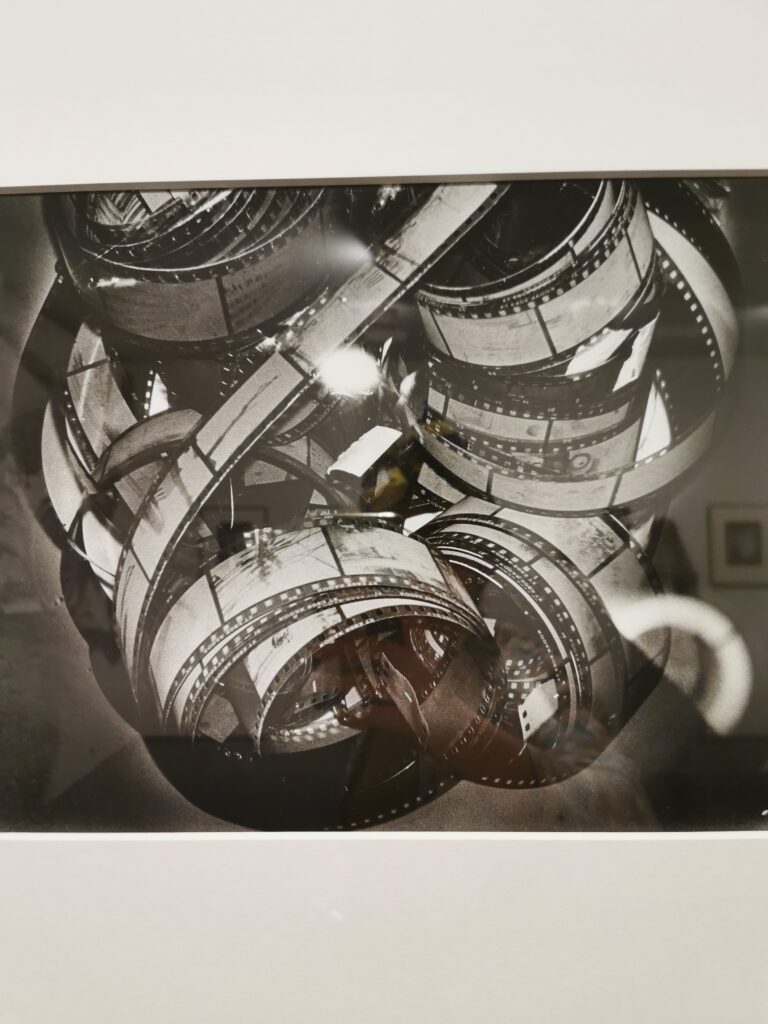
One of the exhibition’s most powerful images is a tangled strip of photographic film. Ordinarily we see film as nothing more than a technical object. Here it resembles the nervous system of memory itself. It twists, folds, loses its shape, almost becoming an organic body.
It inevitably recalls Jacques Derrida’s Archive Fever, where the archive is described not as a calm repository of the past but as a space of anxiety. Every desire to preserve is inseparable from the fear of losing. The archive is never complete; it continually generates new absences.
If European philosophy often understands the archive as resistance against disappearance, Japanese aesthetics proposes another perspective. The concept of mono no aware invites us to recognize beauty precisely because things are fleeting. Their value emerges not despite time, but because of it.
Perhaps this is why Moriyama’s photographs never feel fully finished. They seem to continue aging before our eyes.
This becomes even more evident in his photographs of flowers. For centuries, European art has used flowers as symbols of vanitas. Dutch still lifes reminded viewers that every form of beauty inevitably withers: memento mori—remember that you will die.
Japanese tradition offers almost the opposite lesson. The cherry blossom is not beautiful despite its brief life. It is beautiful because it is brief. Its petals matter precisely because they will fall. Moriyama somehow brings these two traditions together. His flowers remind us of mortality while simultaneously releasing us from the need to resist it.
Light functions in much the same way. In his celebrated essay In Praise of Shadows, Jun’ichirō Tanizaki argues that beauty is born not from complete illumination but from shadow, nuance and ambiguity. Moriyama’s light never tries to make the world fully legible. Instead, it preserves uncertainty. In this sense, his photographs unexpectedly echo the cinema of Andrei Tarkovsky, where light is never simply explanatory but becomes a way of approaching experiences that cannot be fully expressed in words.
Since becoming a mother, this exhibition has acquired another layer of meaning for me. Like many parents, I photograph my child almost every day. I tell myself that I am preserving his childhood. But walking through these galleries, I suddenly realized that every new photograph records not only what still exists, but also the distance that has already opened between that moment and myself.
The archive grows not because time has stopped. It grows because time continues to leave.
Perhaps that is why photographs of children are often so difficult to revisit. They do not bring the past back. They reveal how far away it has already become.
In Buddhist philosophy, there is the concept of anitya—impermanence as the fundamental condition of existence. Everything that arises is destined to change. For a long time, Western photography attempted to resist this truth, promising humanity a small victory over time. Moriyama does the opposite. He accepts impermanence as photography’s primary material.
Perhaps that is why the exhibition is called Lettres d’amour à la photographie—Love Letters to Photography. A love letter never guarantees that love will last. It simply testifies to the desire to speak, even while knowing that words cannot stop time.
Moriyama’s photographs make the same gesture. They do not promise eternal memory. They are declarations of love addressed to a world that changes with every passing second.
And perhaps this is where East and West finally stop arguing. One tradition has spent centuries searching for ways to preserve what disappears. The other has learned to recognize beauty in disappearance itself.
Daido Moriyama’s photographs exist between these two ways of seeing. They remind us that the task of art is not to defeat time, but to learn how to look at it without illusion. Perhaps that gaze is the deepest way of preserving what we love—even while knowing that we can never truly hold on to it.
Khulkar Yunusova (Stella Polare) is a Uzbek contemporary artist, based in Paris, whose interdisciplinary practice explores memory, childhood, and cultural transmission. Through the series You See / I See, she shares personal reflections on exhibitions, approaching them from the perspective of an artist rather than an art critic.